HBR-B09 and HBR-B01 are both synthetic polyol ester oils for HANBELL screw compressors, stocked as HBR-B09 and HBR-B01. They ship in the same 18.9 L pack, they are quoted on the same terms, and on a shelf they look like two tins of the same product. They are not interchangeable. HBR-B09 is the 170 class, measured at 175.2 cSt at 40 °C. HBR-B01 is the 320 class, the heaviest grade HANBELL lists in the series.
The difference decides which compressor the oil goes into. Pick the wrong one and the machine tells you within a season: either the oil film is too thin for the load, or the oil is too heavy to come back from the evaporator.
| HBR-B09 | HBR-B01 | |
|---|---|---|
| Base oil | Synthetic polyol ester (POE) | Synthetic polyol ester (POE) |
| Viscosity | 175.2 cSt at 40 °C, the 170 class | The 320 class, heaviest in the HBR-B series |
| Refrigerants | R22, R134a, R404A, R407C, R507 | HFC systems on air conditioning and heat pump duty |
| Compressors | HANBELL screw compressors; HANBELL also lists it for Refcomp SW, Frascold NRL and BITZER HSK/HSN | HANBELL screw compressors on air conditioning and heat pump duty |
| Pack | 18.9 L container | 5 US gallon (18.9 L) pail |
| Same viscosity class as | Emkarate RL170H, BITZER BSE170, Suniso SL170, CPI Solest 170, Refcomp E, Frascold F-170E | BITZER B320SH, Suniso SL320, Refcomp M, Fusheng FS300R, York/Frick G, Trane OIL0025E, CPI CPI320 |
| Equivalent we supply | Qishanr QSL-170H | Qishanr QSL-320H |
Both are supplied as the original HANBELL product or as our equivalent blended in Foshan, with the technical data sheet and safety data sheet issued with the quotation and a batch certificate of analysis with the shipment.
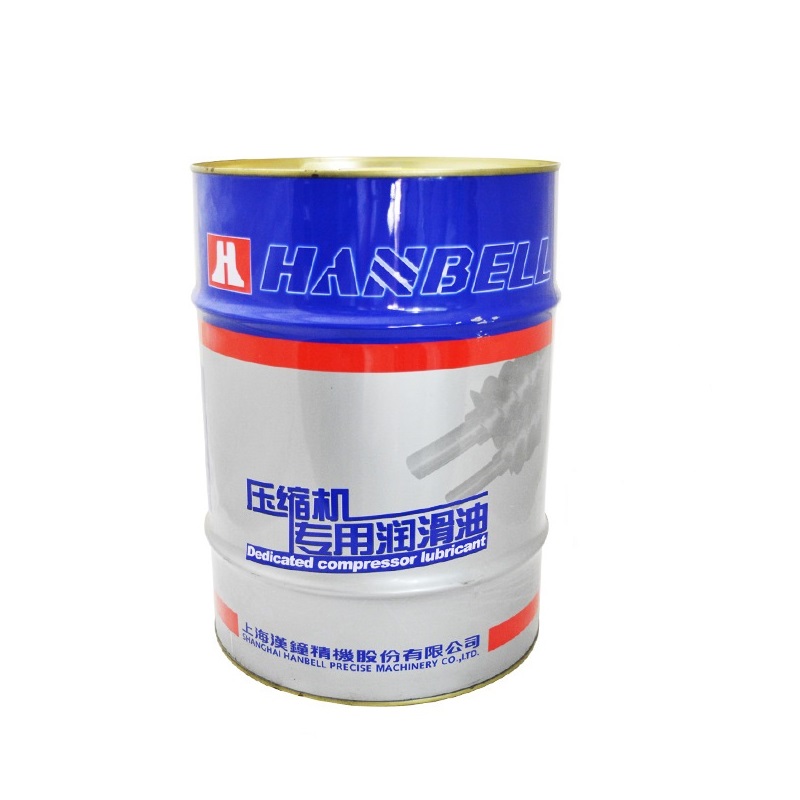
The HBR-B series runs from a 32 class to a 320 class, and the number is the only thing that separates most of the grades. Four of them carry a measured figure at 40 °C: HBR-B05 at 66.3 cSt, HBR-B08 at 127.7 cSt, HBR-B09 at 175.2 cSt and HBR-B04 at 216 cSt.
| Grade | Class | Duty HANBELL pairs it with |
|---|---|---|
| HBR-B12 | 32 | Piston, scroll and centrifugal chillers |
| HBR-B05 | 68 | Low-temperature screw compressors on HFC refrigerants |
| HBR-B08 | 120 | Screw compressors on HFC refrigerants |
| HBR-B09 | 170 | Screw compressors on HFC refrigerants in industrial refrigeration and chillers |
| HBR-B04 | 220 | Screw compressors in medium and high temperature systems on HFC refrigerants |
| HBR-B01 | 320 | Screw compressors on air conditioning and heat pump duty |
The duty follows the temperature range. At the cold end the light oil is specified, because a heavy oil travelling through a low-temperature evaporator returns slowly and the compressor runs on a falling level. At the warm end the heavy oil is specified, because a screw at air conditioning and heat pump conditions carries a higher load on the rotors and needs a film that survives it.
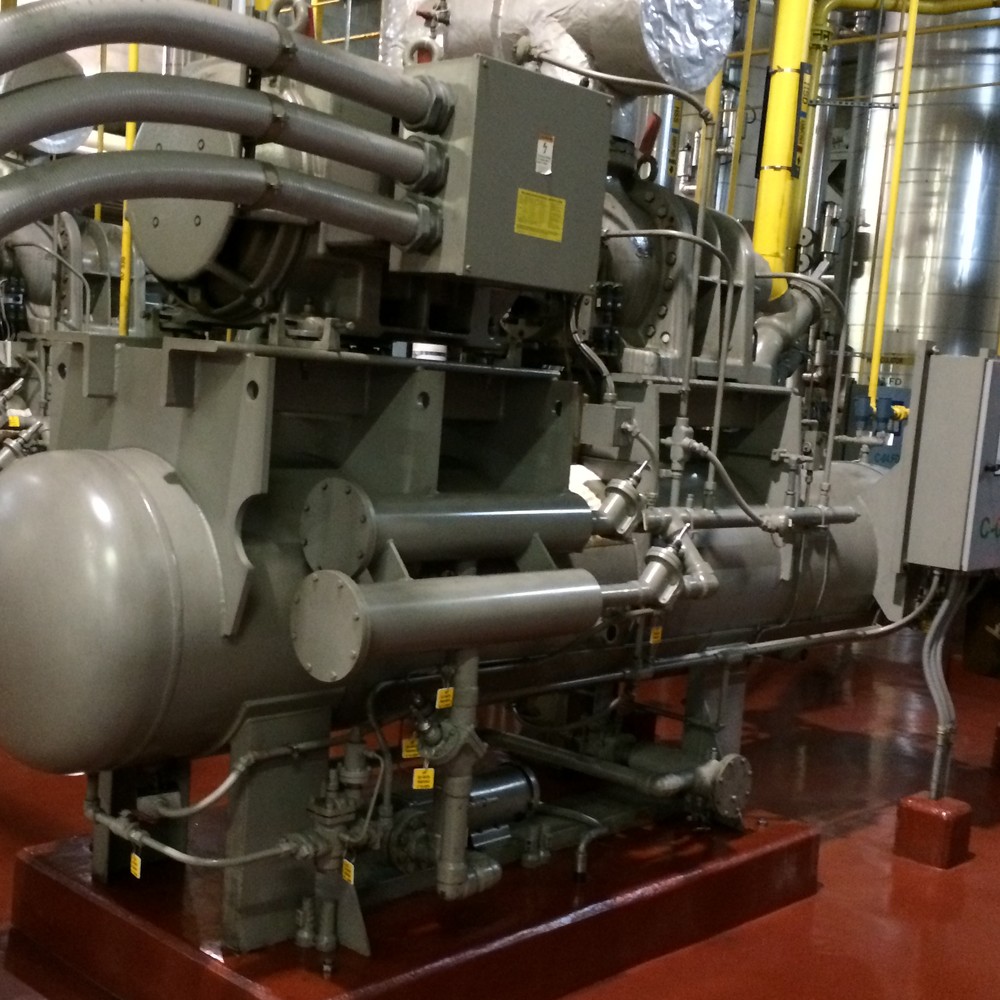
HBR-B09 sits in the middle of that ladder. It is the grade for a screw compressor doing refrigeration work on an HFC charge, including industrial chillers, cold stores and process cooling circuits, where the 68 and 120 classes no longer hold the film.
Two grades in the series are easy to read past. HBR-B08 is the 120 class at 127.7 cSt, which is close enough to the 170 class on paper that a buyer scanning a stock list can take one for the other. HBR-B04 is the 220 class at 216 cSt, one step below the 320 class of HBR-B01 and often the grade a machine actually wants when the specification says "heavy". Both mistakes produce the same result as an outright wrong grade: a charge that runs outside the film thickness the rotor load was designed around.
Not every HBR-B grade is a POE. HBR-A01 is a naphthenic mineral oil at 100 cSt at 40 °C, supplied for HANBELL rotary screw compressors on air conditioning and industrial refrigeration duty where a mineral charge is specified, and it is stocked as HANBELL HBR-A01. The B03, B06, B07 and B10 grades in the series are not POE grades.
A plant that runs both kinds of machine holds two stocks, because a mineral charge and an ester charge are not interchangeable and are not mixed in a system: the two behave differently with the refrigerant, and a mixed charge belongs to neither specification. A compressor specified for HBR-B09 or HBR-B01 takes the ester, and a compressor specified for HBR-A01 takes the mineral.
HBR-B09 lists R22 alongside R134a, R404A, R407C and R507 in its refrigerant data, which is why it appears in retrofit work as well as in new equipment. A screw compressor that ran on R22 and a mineral charge and is being moved to an HFC refrigerant needs an ester charge, and the 170 class is the class those machines usually specify once the conversion is done.
The conversion itself is the part that decides whether the fill survives. POE takes up moisture, so the circuit is flushed, the drier is changed and the system is evacuated to the maker's figure before the charge goes in. A 170 class fill put into a circuit still carrying mineral residue or moisture reads correctly on the invoice and wrongly on the first oil analysis.
The grade is written in the machine's own paperwork: the service manual, the oil specification sheet or the label on the oil separator. If that says 170 class, HBR-B09 is the match. If it says 320 class, HBR-B01 is. Where the documentation names another maker's oil instead of a class, the class that oil belongs to settles the question.
Air conditioning and heat pump duty takes the 220 or 320 class, and HBR-B01 is the 320 grade within that pair. Refrigeration duty on an HFC charge, at the temperatures a cold store or a process chiller runs at, takes the 170 class. A machine that moves between the two duties is a conversation with the compressor maker rather than a guess, because the charge is set for the worst case the unit is rated for.
The oil being replaced is the best evidence available on site. A service fill matches the class of the oil that was drained. A change of class follows the maker's specification, and the compressor model plus the refrigerant settle it. If the drained oil cannot be identified, the compressor model and the refrigerant are enough for us to confirm the class against the data sheet before quoting.
A 170 class oil in a compressor specified for 320 runs with a thinner film than the rotor load requires. The wear shows first at the rotor contact and the bearings, and the discharge temperature climbs because the oil is carrying less heat away from the working parts.
A 320 class oil in a low-temperature evaporator does the opposite. It is thick at evaporating temperature, it moves through the circuit slowly, and it collects where the refrigerant is coldest. The crankcase level drops while the system still holds the full charge, the low oil pressure cut-out trips, and the technician finds the missing oil sitting in the wrong part of the plant.
Neither mistake is repaired by topping up. Both end with a drained charge, a flush and a full fill of the correct grade, which is a full charge of oil to pay for twice.
HBR-B09 sits in the same viscosity class as Emkarate RL170H, BITZER BSE170, Suniso SL170, CPI Solest 170, Refcomp E and Frascold F-170E, and we blend Qishanr QSL-170H into the same class in Foshan.
The 320 class does the same at the heavy end: BITZER B320SH, Suniso SL320, Refcomp M, Fusheng FS300R, York/Frick G, Trane OIL0025E and CPI CPI320 all sit in it, alongside Qishanr QSL-320H.
The class is what carries across, and whether a particular charge can be substituted is decided against the compressor maker's specification. That is the check we run before a quotation goes out.
Six fields turn either grade into a firm quotation:
We confirm the class against the data sheet, quote the grade and the equivalent we can blend, and issue the technical data sheet and safety data sheet with the quotation.
| Item | Terms |
|---|---|
| Minimum order | No fixed figure, confirmed per order against grade, pack, quantity and container load |
| Pack size | 18.9 L container; custom pack formats quoted as an item |
| Supply ability | 1,000 pieces per year on each grade |
| Price terms | Any Incoterms 2020 term, quoted against your destination port |
| Payment | T/T, L/C, PayPal and other commonly used methods |
| Documents | Technical data sheet and safety data sheet with the quotation; batch certificate of analysis with the shipment |
| Origin | Original HANBELL product, or equivalent blended at our plant in Foshan, China |
| Private label | Available on quotation, including container artwork and pack format |
The blending plant in Foshan runs at 6,000 tonnes a year and has been producing lubricants for more than ten years, which is what makes the equivalent grades possible alongside the original product.
No. They are different viscosity classes, and mixing them leaves a charge that matches neither the 170 nor the 320 specification. Drain, flush and fill with one grade.
The 170 class has no ISO VG number. HBR-B09 is quoted by its measured viscosity, 175.2 cSt at 40 °C, which falls between the ISO VG 150 and ISO VG 220 bands.
Heat pump duty takes the 220 or 320 class, the same pairing as air conditioning. HBR-B01 is the 320 grade of that pair, and HBR-B04 is the 220 grade.
The 170 class, HBR-B09, for a screw compressor on an HFC charge. Where the compressor maker specifies a lighter charge, HBR-B05 is the 68 class in the same series.
This article was first published by QishanrLubricants on October 29, 2026. When you quote its figures, grade data or commercial terms, credit QishanrLubricants and link to this page. © 2026 Guangzhou Qishanr Technologies Co., Ltd.
About QishanrLubricants · Contact us
Send the compressor model, the refrigerant and the oil you are replacing through the HBR-B09 product page, the HBR-B01 product page or the contact form, and we confirm the class before quoting. Buying checks for the 320 grade are set out in the HANBELL HBR-B01 ordering guide, and export packing and documents are covered in the refrigeration oil export order guide.